Software & User Interface Portfolio
Michael Grabois // Flight Design, Operations & Human Factors Assets
In my time at NASA, I had numerous opportunities to work on computer-based training in many formats, from SharePoint and PowerPoint to HTML to laptop programs. Here's what I can show you.
Telemetry Assets Index
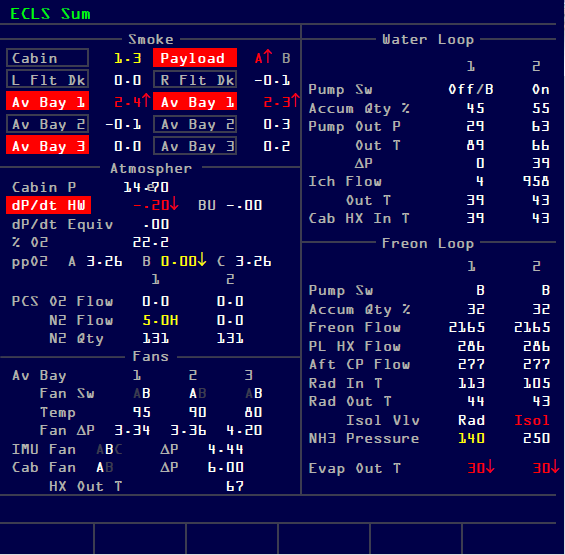
I was a core member of the Cockpit Avionics Upgrade project (1999-2004), which was a redesign of the Shuttle computer displays to add color and graphics while adding new capabilities and information to the displays. With strict design criteria imposed by the Astronaut Office and Human Factors personnel (colors, fonts, graphical elements), I created or helped design ~15 different displays in the Environmental Control & Life Support, Electrical, Hydraulic, Mechanical, and Caution & Warning systems). The project resulted in a 50% decrease in both crew workload and error rate. [PDF Link]
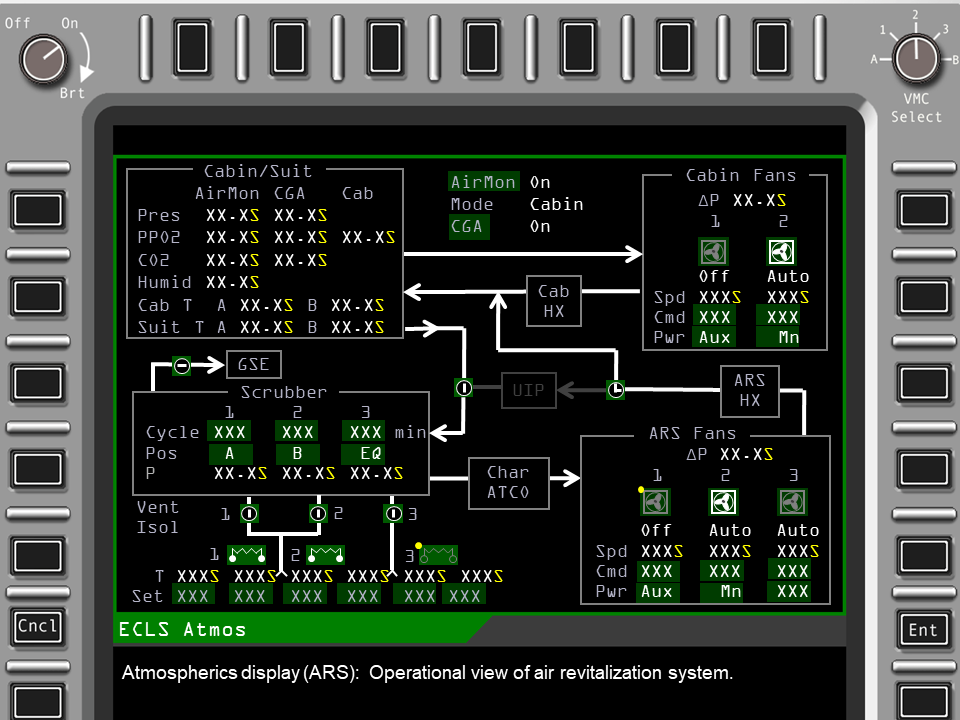
I created the first prototypes of the Orion spacecraft cockpit displays in 2008-09 for the Environmental Control and Life Support (ECLS) systems. The descendants of my displays were used by the Artemis II crew in 2026. This shows the Atmospheric Revitalization System; others included the Nitrogen/Supply Water system, the Atmospheric Control system, the ECLSS Suit system, the ECLSS Summary page, and the ECLSS part of the System Summary page.
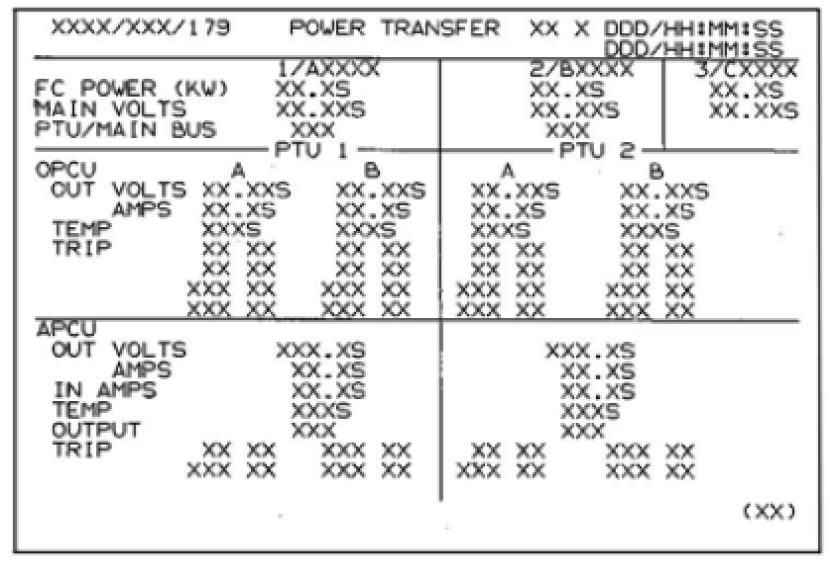
With the limitations and constraints of the Shuttle flight software and green-on-black display capabilities, I created the display for the crew to monitor the Station to Shuttle Power Transfer System (SSPTS). This was done in conjunction with the corresponding CAU display, as both projects were active at the same time. These displays had some innovation in presenting information to the crew that they did not have elsewhere.
In my early career in Flight Design and Dynamics (1988-1995) I created graphical user interfaces for Unix-based applications and designed the main display for my Mission Control console position called Targeting, which was used for the last 16 years of the Shuttle program (1995-2011). Unfortunately, I never got around to making a copy of the new display before I left the group.
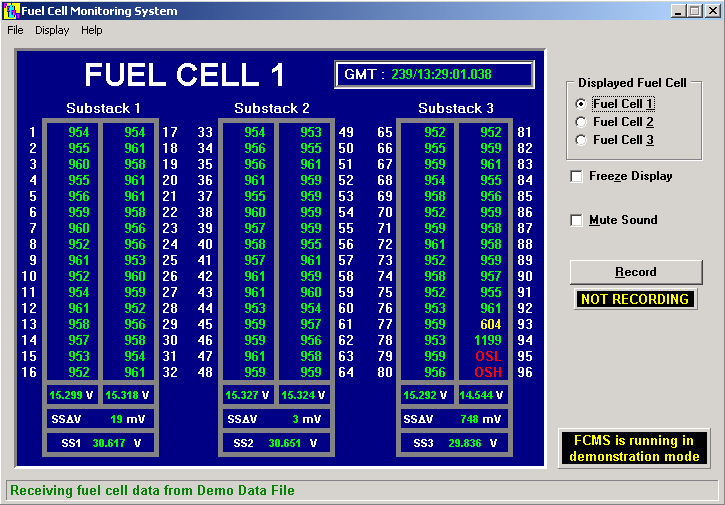
I storyboarded 2 different applications for the Shuttle's Payload & General Support Computers (PGSCs) that were then coded by a software developer. I worked with the programmers to maintain the desired look and feel of the output display and menu structure given the various parameters that the programs had as inputs.
- Fuel Cell Monitoring System - gave the crew insight into the inner workings of the power-producing fuel cells, which Mission Control did not have direct insight into. My program made it possible for the crew to review the data and tell MCC the health and status of the fuel cells without having to terminate the mission early.
- Supply Water Dump - gave the crew a visual representation of what was happening when performing a Supply or Waste Water Dump, as requested by the crew.
I storyboarded and provided upgrades to 2 other PGSC applications at the request of the crew office, which were both procedural and safety-related.
- Cabin Leak - used by the crew to determine how much time they had available in the event of loss of cabin pressure before having to make an emergency deorbit. I uncovered a serious error in this already-approved program that could have resulted in the potential loss of crew had the application been used in the manner it was intended, and I shepherded the fix through production (this won me a Safety award).
- 10.2 Depress - used by the crew during the planned depressurization of the cabin in preparation for a spacewalk.
The link provides an excerpt from the PGSC applications users' guide (2009), which I also wrote, showing these 4 PGSC applications (last modified between 2001 and 2007). [PDF Link]

I created a simple HTML website (2000) presenting various Shuttle mechanical structures (in particular, the payload bay doors) with photos and videos taken in-flight to show the user what visual cues to look for at various time frames in the flight. This supplemented the flight procedures, which only had line drawings. The entire set of web pages with photos and video fit onto a compact disc, and several crews requested to fly a copy of the CD as additional training material in flight.
Note that the code for this web page was modified from HTML3 into HTML5 in 2016 for ease of video embedding, but otherwise this is what the crew used on their laptops for on-orbit training. (Updated at various times through 2005)
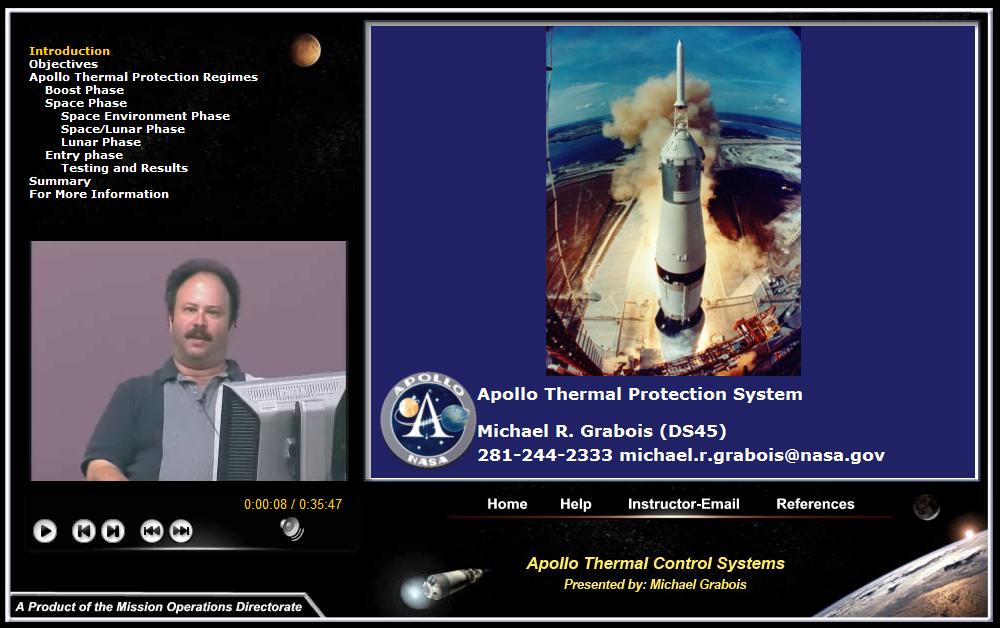
I was a member of a knowledge capture team (2007-2009) that extracted useful lessons learned information from Apollo-era documentation and reformatted it for current technology, to be used in Constellation design and methodology. The information was presented in PowerPoint and captured in streaming video (with Microsoft Producer), with details in collaborative project management wiki websites (SharePoint). I wrote a paper on the project and presented it at the International Astronautical Conference in South Korea in 2009, and the paper was later published in the journal Acta Astronautica. This website is still available from within the nasa.gov firewall. [PDF Link]
In the Oil & Gas industry (2013-2016), I had the opportunity to work with a multimedia specialist to create e-Learning training material for offshore workers, in the form of streaming video and PowerPoint presentations. Unfortunately, those materials remain proprietary.